

Kidney disease has a habit of creeping up quietly, plenty of people don't notice anything's wrong until function has already dropped. Knowing where each stage stands helps you act at the right moment instead of after the fact. With timely testing, regular monitoring, lifestyle changes, and the right Kidney Disease Treatment in Ahmedabad , many patients manage to slow the disease and protect their day-to-day quality of life.
What Are the Stages of Kidney Disease?
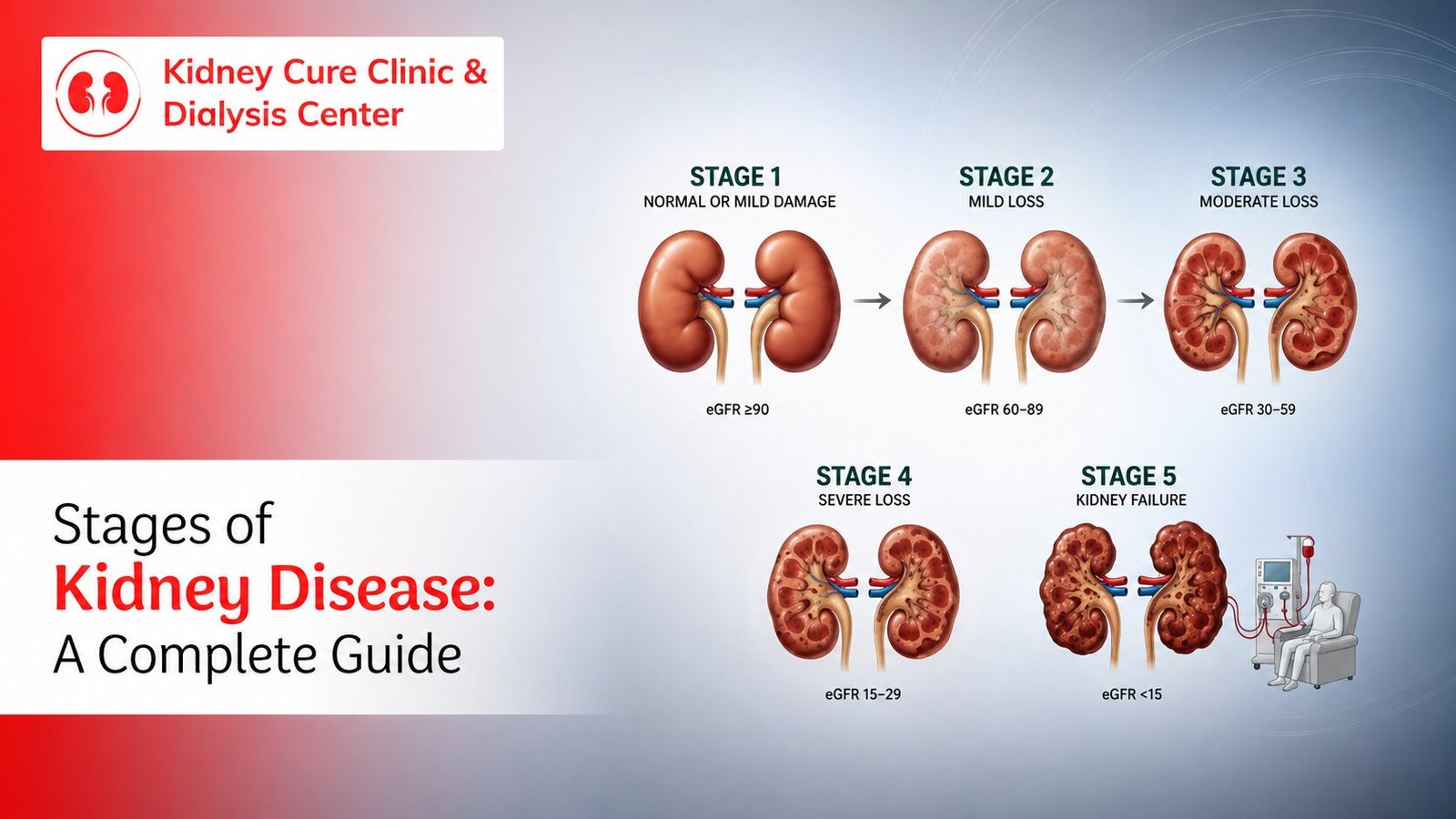
Chronic kidney disease is typically classified using estimated glomerular filtration rate, or eGFR, alongside how much albumin shows up in the urine. eGFR gives a sense of how well the kidneys are filtering blood, while urine albumin points to actual kidney damage.
| Stage | eGFR Range | What It Means |
|---|---|---|
| Stage 1 | 90 or higher | Kidney function may be normal, but there's evidence of damage |
| Stage 2 | 60 to 89 | Mild reduction in kidney function |
| Stage 3a | 45 to 59 | Mild to moderate reduction |
| Stage 3b | 30 to 44 | Moderate to severe reduction |
| Stage 4 | 15 to 29 | Severe reduction in kidney function |
| Stage 5 | Below 15 | Kidney failure |
These stages follow current classification guidance, though a single eGFR reading rarely tells the whole story on its own. CKD is generally diagnosed once kidney damage or reduced function has stuck around for at least three months.
Stage 1: Kidney Damage May Be Present Without Symptoms
At Stage 1, eGFR usually sits at 90 or above, but tests can still pick up signs of damage — albumin in the urine, say.
Most people feel entirely fine here, which is exactly why routine testing matters, especially for anyone with diabetes, high blood pressure, or a family history of kidney disease.
What helps comes down to the basics: regular blood and urine tests, keeping blood pressure controlled, eating well, staying active, and treating whatever underlying condition is at play.
Stage 2: Early Kidney Function Decline
Stage 2 means an eGFR between 60 and 89, with some evidence of damage.
Symptoms can still be absent entirely. Some people notice tiredness, changes in urination, or swelling, though none of that is specific enough to point to kidney disease alone.
This stage matters because it's often when the cause can still be identified and further damage headed off. Your doctor will likely recommend regular monitoring of eGFR and urine albumin from here.
Stage 3: Kidney Function Needs Closer Attention
Stage 3 splits into two — 3a runs from 45 to 59, and 3b covers 30 to 44.
Some patients start noticing swelling, tiredness, changes in urination, muscle cramps, poor appetite, or shifts in blood pressure at this point, though symptoms vary a lot from person to person.
Doctors usually start by figuring out what's actually causing it. From there it's a matter of getting blood pressure, and diabetes, if that's in play, under control, taking a fresh look at your current medicines, staying on top of any complications, and checking in on kidney function regularly.
Stage 4: Severe Kidney Function Loss
By Stage 4, eGFR has dropped to 15-29, and the kidneys are struggling noticeably to clear waste and keep the body's fluid and chemical balance in check.
Swelling, weakness, nausea, reduced appetite, sleep trouble, or changes in urination can show up, though some people still have relatively few symptoms even here.
Stage 5: Kidney Failure
Stage 5 means eGFR has fallen below 15, kidney failure Kidney Care in Ahmedabad, in plain terms.
Symptoms tend to become significant, since the kidneys can no longer do their job adequately. Depending on the individual's condition, treatment might mean dialysis, a kidney transplant, or supportive care. Not everyone follows the same path here, so treatment gets built around what the person actually needs.
Can Kidney Disease Be Slowed?
Often, yes — though the outcome still depends on the underlying cause and each person's overall health. Diabetes, uncontrolled blood pressure, rising urine albumin, and a falling eGFR are the main factors tied to faster progression.
A few things genuinely help: keeping blood pressure within whatever range your doctor's set, managing blood sugar if diabetes is part of the picture, taking prescribed medicines properly, avoiding painkillers or supplements without medical advice, sticking to a kidney-friendly diet suited to your case, showing up for scheduled tests, and staying active as your doctor recommends.
If your kidney test results have come back abnormal, don't panic, but don't ignore it either. Getting checked early at Kidney Cure Hospital , staying on top of monitoring, and finding the right Kidney Disease Treatment in Ahmedabad genuinely changes how well your kidneys hold up over time. Call +91-7490906544 and get you health checkup today.
Frequently Asked Questions
There are five, ranging from early damage at Stage 1 through to severe failure by Stage 5, mostly tracked through eGFR.
Once you hit Stage 4 or 5, function has dropped enough that things get genuinely serious. Catching it and treating it earlier makes a real difference in how fast it progresses.
It can, experienced nephrologists at places like Kidney Cure Hospital handle diagnosis, ongoing monitoring, and full treatment locally.
Don't sit on it. Get in front of a nephrologist so they can figure out why and run the tests needed to check where your kidney function actually stands.
Not typically. Most people at this stage do fine with medicines, lifestyle adjustments, and staying on top of regular monitoring.