


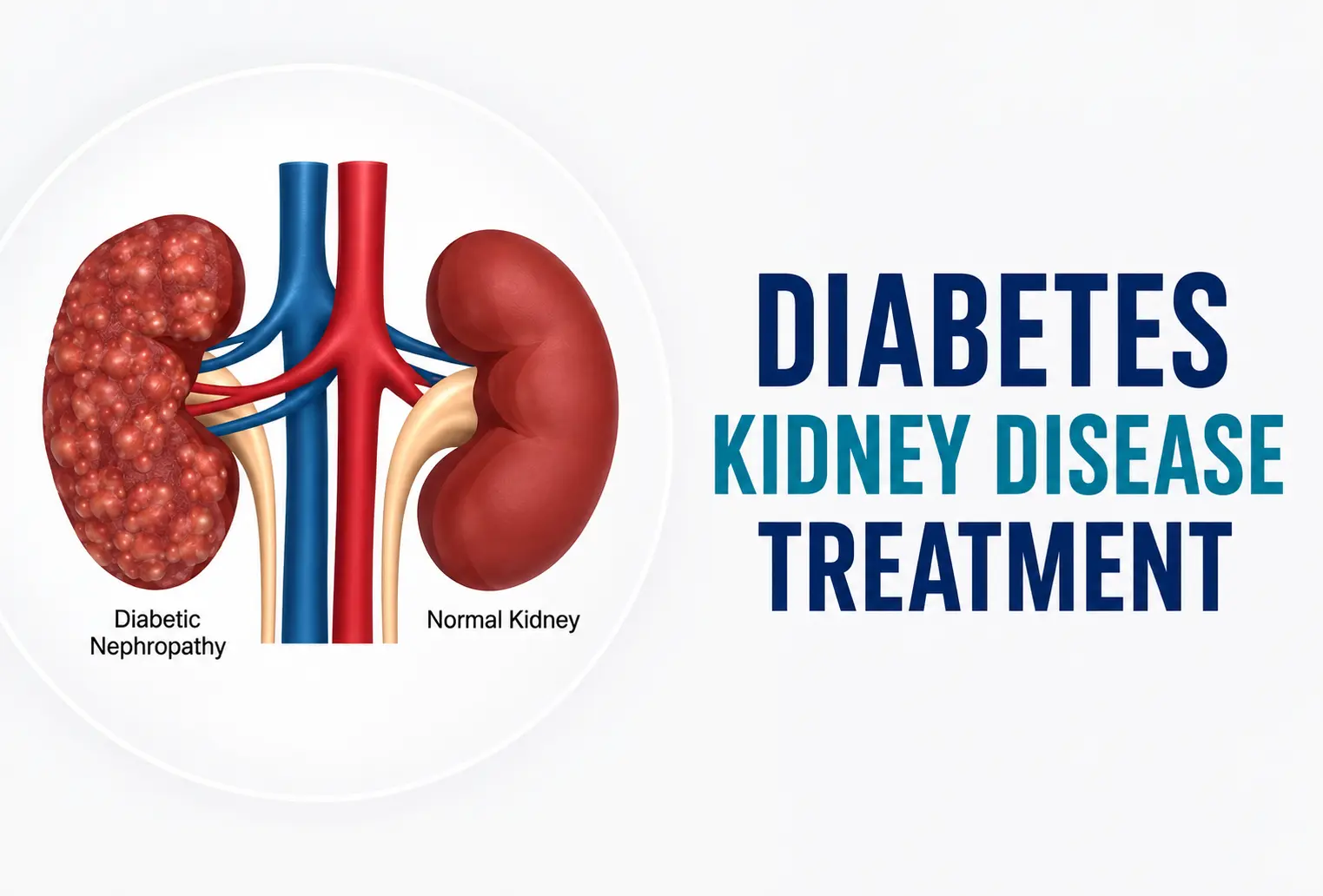
Diabetes is one of the main causes of kidney damage over time. Early diagnosis and proper treatment can genuinely slow that damage down. If you're looking for diabetes kidney disease treatment in Ahmedabad, getting to an experienced nephrologist sooner rather than later is what protects kidney function and keeps kidney failure further away.
At Kidney Cure Hospital, care for diabetic kidney disease, also called Diabetic Nephropathy, is built around the individual patient. Blood sugar control, blood pressure management, preserving whatever kidney function remains, and preventing complications before they show up. Whether it's early-stage chronic kidney disease (CKD in diabetes) or something more advanced, the plan gets built around where you actually are.
High blood sugar, left unchecked, damages the kidneys gradually. That's diabetic kidney disease in a sentence, and it's one of the most common complications tied to long-standing diabetes.
Healthy kidneys filter waste and extra fluid out of the blood without much fuss. Uncontrolled diabetes chips away at the tiny blood vessels inside the kidneys over time, and once those vessels are damaged, the kidneys simply can't keep up the way they used to. That's diabetic nephropathy.
Not every diabetic develops kidney disease, to be clear. But poor blood sugar, high blood pressure, smoking, obesity, a family history of kidney disease, stack a few of these together and the risk climbs.
Quiet is the word for this one. Early on, there's often nothing, no symptoms at all and that's precisely the danger. Damage can be underway well before anything actually feels wrong, which is why kidney screening on a regular basis isn't optional.
Routine blood or urine tests are how a lot of people find out, not because they noticed something themselves. It's only once kidney function has slipped further that symptoms tend to surface.
Some early signs to watch for:
Diabetic and waiting for symptoms to show up first? Don't. Annual kidney function tests and urine protein tests are what catch problems while treatment can still do the most good.
Diabetic or not feeling any different, kidneys should still get checked regularly if diabetes is in the picture. Early treatment is what protects function and keeps serious complications at bay.
Talk to a nephrologist if you:
Get medical advice early, and there's a much better chance of managing the condition before it moves toward advanced kidney disease.
How much kidney function remains determines the treatment path. Early stages tend to respond well to medicines and lifestyle changes; advanced stages need something more specialised.
Kidney damage is mild here, symptoms usually absent entirely.
Our Diabetes Kidney failure treatment in Ahmedabad at this point focuses on:
Many patients slow disease progression considerably just by staying consistent with treatment.
Function drops a bit more noticeably here, so treatment has to keep pace.
Here's what doctors typically adjust at this point:
Follow-up visits carry more weight from here on out.
Once kidney function has dropped significantly, treatment moves into more advanced territory to keep up.
This stage may involve:
Plan early, and patients get to make informed decisions well before kidney failure actually arrives.
Diabetes-related kidney damage, left unchecked for years, can end in kidney failure eventually. Once that happens, treatment turns toward replacing lost kidney function, all while still keeping diabetes under control alongside it.
Advanced kidney disease calls for comprehensive care, since diabetes doesn't just affect the kidneys; the heart, blood vessels, eyes, and nerves are all in play too.
Diabetes renal failure treatment in Ahmedabad may include:
Getting the best outcomes here takes real coordination, nephrologist, diabetologist, and other specialists working from the same page.
Diabetic nephropathy is often manageable. The right treatment slows kidney damage and lowers the odds of kidney failure down the line.
It develops gradually, which is exactly why regular monitoring matters for anyone living with diabetes. Our Diabetes Kidney Disease Treatment in Ahmedabad at Kidney Cure Hospital focuses on preserving kidney function while going after whatever's causing the damage underneath.
A typical plan for this may include:
Adjustments happen at regular follow-ups for, based on how progress is going and what keeps complication risk down.
Advanced diabetic kidney disease, in suitable patients, is sometimes worth considering for transplant. Getting the evaluation right beforehand and staying on top of follow-up afterward both matter just as much as the surgery itself.
Not every diabetic patient with kidney failure needs a transplant right away. Overall health, heart condition, blood sugar control, kidney function, your nephrologist weighs all of it before recommending this route.
Transplant care here includes:
Careful planning on both sides of surgery is what improves recovery and protects the transplanted kidney over the long run.
Managing diabetic kidney disease takes more than controlling blood sugar alone. It needs specialists who genuinely understand diabetes and kidney health together, not as two separate problems.
At Kidney Cure Hospital, care spans every stage of diabetic kidney disease, with the goal of slowing progression, managing complications, and helping patients hold on to the best quality of life they can.
Why patients choose us:
Informed patients make better decisions, that's something we genuinely believe. Our team explains the condition, the options, and the lifestyle side of things in plain language, so patients feel confident about their own care.
Protecting the kidneys starts with catching problems early, and that's really what regular check-ups are for if you're living with diabetes, spotting trouble before permanent damage sets in.
Kidney disease symptoms, or an existing CKD in a diabetes diagnosis either way, our nephrology team is ready to run a detailed evaluation. Diabetes Kidney Disease Treatment helps manage diabetes kidney failure treatment in Ahmedabad or just a second opinion you want before deciding anything, whatever stage you're at, the care here is built around protecting your kidneys long-term.
Yes, poorly controlled diabetes can wear the kidneys down gradually over time. Catching it early and treating it properly slows that progression considerably.
Protein in the urine, swelling in the feet, and high blood pressure tend to show up first. Many patients feel nothing at all in the beginning, which is exactly why regular screening matters so much.
Not usually reversed once damage has occurred. But early treatment can slow it down and preserve kidney function for years.
Through urine protein tests, blood tests measuring kidney function, blood pressure evaluation, and a look at your overall medical history.
No. Plenty of people with diabetes never develop kidney disease, especially with blood sugar and blood pressure well managed. Regular monitoring lowers the risk further still.
When the kidneys can no longer clear enough waste and fluid on their own. Your nephrologist makes that call based on symptoms, kidney function, and overall health.
Not always entirely, but keeping blood sugar, blood pressure, and cholesterol under control lowers the risk substantially. Healthy habits and routine check-ups pull real weight here too.
Yes. Plenty of diabetic patients qualify for transplantation after a thorough medical evaluation. Your nephrologist will work out whether it's the right option for your case.
A nephrologist diagnoses and treats kidney conditions, diabetic kidney disease included. Getting in early helps slow damage and avoid complications.
At least once a year for most people with diabetes. Patients already dealing with kidney disease may need more frequent checks, depending on what their nephrologist recommends.
Copyright © 2023 Kidney Cure Clinic & Dialysis Center. All Rights Reserved | Develop by Nexus