

Kidneys clean the blood every day without you noticing. When they can't do that anymore, dialysis takes over the job. If you're looking into Kidney Dialysis Treatment in Ahmedabad , timing matters. Starting the right care early can change how kidney disease affects your daily life.
Kidney Cure Hospital's nephrologists put together dialysis plans built around each patient, covering chronic kidney disease, acute kidney injury and kidney failure. Some patients come in for planned sessions. Others need emergency dialysis in Ahmedabad on short notice. Either way, our team stays focused on safety, close monitoring and support that doesn't stop once the session ends.
Dialysis does the work your kidneys can't anymore. It clears waste, removes excess fluid, and removes toxins from the blood. Healthy kidneys handle this around the clock without a break. Once kidney disease or failure sets in, that waste has nowhere to go, so it builds up in the body instead. Dialysis steps in to clear it, keep minerals balanced and manage fluid so the body keeps running close to normal.
Here's something a lot of patients get wrong at first, dialysis is not a cure. It replaces part of what the kidneys used to do, either while waiting for a transplant or as an ongoing treatment.
Anyone searching for a Kidney Dialysis Hospital in Ahmedabad should look past the basics. Dialysis needs regular monitoring, tight infection control and a plan that actually fits the patient, not a routine copied from someone else's chart.
Dialysis usually gets recommended once the kidneys stop clearing enough waste and fluid on their own to keep the body functioning properly. It's rarely one lab result that decides this. Doctors look at overall health and symptoms together.
You may need dialysis if you're facing:
If you're not sure whether dialysis applies to your situation, a Kidney Specialist for Dialysis in Ahmedabad can walk through it with you.
Kidney failure rarely announces itself. It builds slowly, and the early symptoms are easy to brush off as something else. As function drops, waste starts collecting in the blood and eventually affects almost every part of the body.
Some signs worth paying attention to:
None of this automatically means dialysis is coming next. But it's a reason to get a nephrologist to look at your kidneys soon rather than later.
A few kidney conditions cause damage slowly, over time. Catch them early enough, and you can often slow things down and push dialysis further off.
There are two main options, and your nephrologist will point you toward whichever fits your condition.
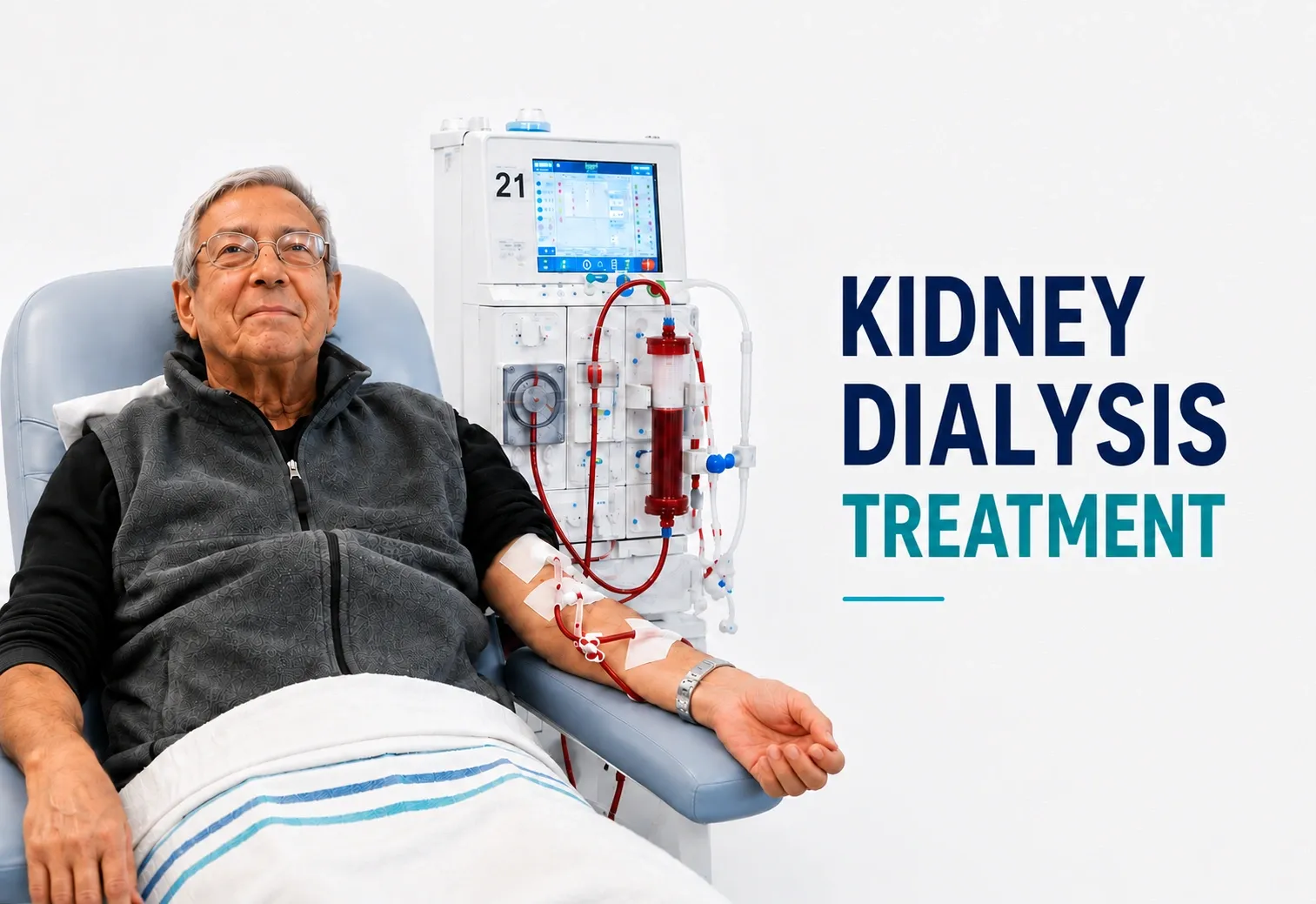
Haemodialysis filters blood through a machine and an artificial filter. It's the most common form of dialysis by far. Blood leaves the body through a vascular access point, passes through the machine, and returns clean. If you're researching Haemodialysis Treatment in Ahmedabad, our haemodialysis centre in Ahmedabad runs on modern equipment, strict infection control and trained staff watching every session closely. That holds whether it's a scheduled renal dialysis treatment in Ahmedabad or an urgent 24-hour emergency dialysis service.
Peritoneal Dialysis works differently. It uses the lining of the abdomen as a natural filter, and once you've had training, it can often be done at home. A cleansing fluid goes into the abdomen through a soft catheter, pulls out waste and fluid, then gets drained out. It doesn't suit every patient, but for those with stable kidney disease, it offers a lot more flexibility.
The haemodialysis procedure clears waste, fluid and toxins from the blood through a dialysis machine, connected to the body via a vascular access point such as an AV fistula, AV graft or dialysis catheter.
Every dialysis session follows the same careful sequence, checked and monitored at each stage.
Emergency dialysis comes in when toxins or excess fluid reach a genuinely life-threatening point. Not every patient will ever need this. But some situations simply can't wait for a scheduled appointment.
You may need Emergency Dialysis in Ahmedabad if you develop:
Waiting too long here can lead to heart rhythm problems, lung complications or lasting organ damage. Kidney Cure Hospital runs a 24-hour emergency dialysis service in Ahmedabad for patients who can't afford to wait.
For a lot of patients, dialysis isn't a one-time event, it becomes part of the routine. So we've tried to build the experience around that reality, safe, personal, and something the whole family can lean on, not just the patient.
At our Kidney Dialysis Hospital in Ahmedabad, here's what that actually means day to day:
Catching kidney damage early can slow it down and keep serious complications at bay. If you're noticing symptoms, or a doctor has already told you it's time to start dialysis, don't put off seeing a nephrologist. Whether it's routine Kidney Dialysis Treatment in Ahmedabad, Emergency Dialysis in Ahmedabad, or just a second opinion on managing kidney failure, our nephrology team is ready when you are.
No. It takes over part of what your kidneys used to do, cleaning the blood and clearing excess fluid, but it doesn't cure kidney failure.
Not really. You'll likely feel a brief pinch when the needles go in, but the treatment itself isn't painful.
Roughly four hours, though it varies with your condition and treatment plan.
Most patients come in three times a week. The exact number depends on kidney function and overall health.
Yes. It removes waste products, creatinine included, that the kidneys can no longer clear on their own.
Many patients keep working, travelling and spending time with family on a regular dialysis schedule, especially when they stay consistent with treatment.
Sodium, potassium and phosphorus usually need limiting, and fluid intake often needs watching too.
Waste and fluid keep building up, which can lead to breathing trouble, high potassium levels and heart problems.
Yes, for patients facing life-threatening complications from kidney failure or a sudden kidney injury.
Dr Umesh Godhani is a nephrologist, also known as a kidney specialist in Ahmedabad.
Yes. These decisions come down to overall health and existing conditions, not age by itself.
Not always. Some patients with a temporary kidney injury can stop once their kidneys recover. Patients with permanent kidney failure usually stay on dialysis unless they get a kidney transplant.
Copyright © 2023 Kidney Cure Clinic & Dialysis Center. All Rights Reserved | Develop by Nexus