

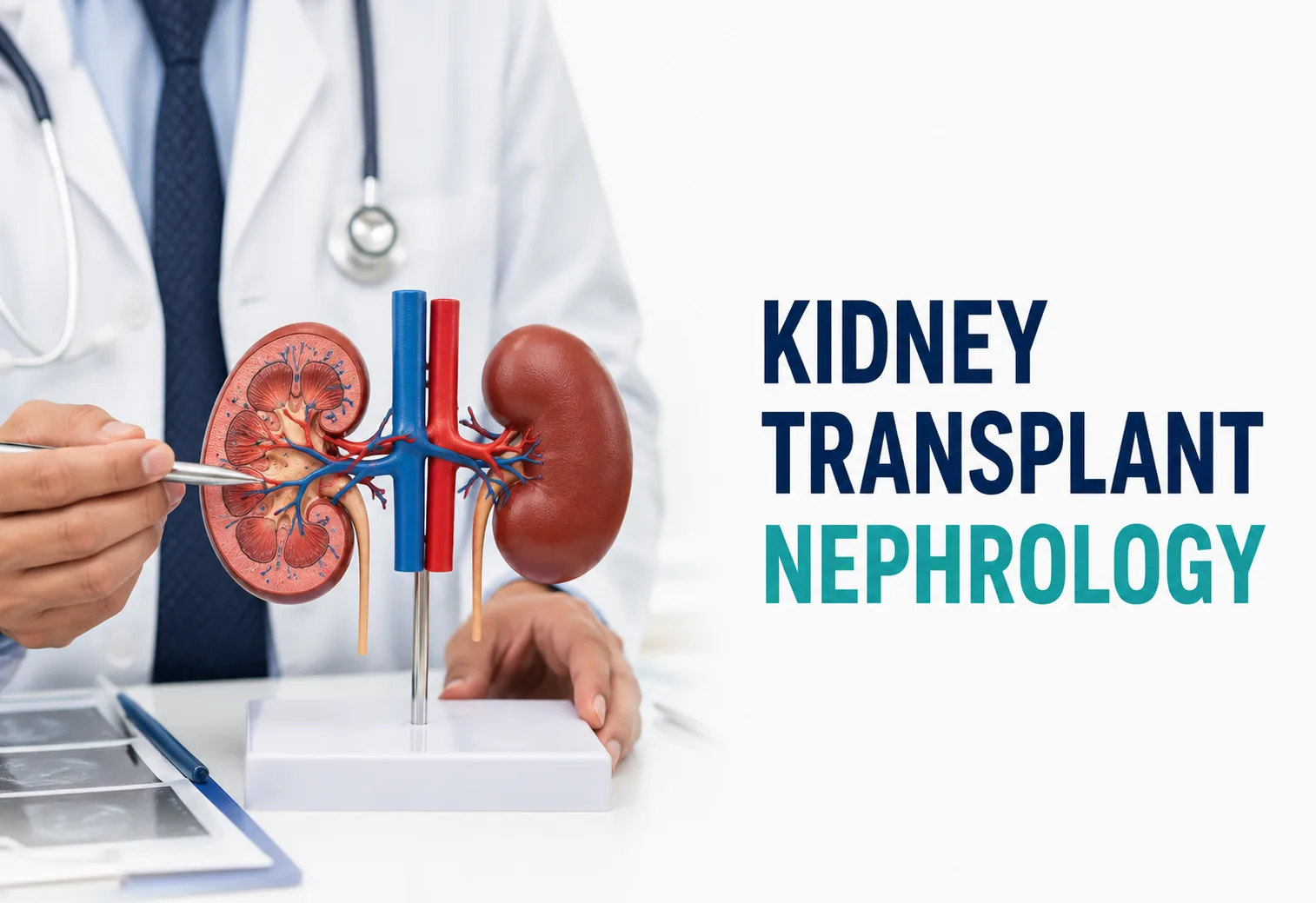
If your kidneys have reached advanced or end-stage failure, a transplant can mean a working kidney again and a lot less time on dialysis. That's what kidney transplant nephrology in Ahmedabad is built around.
A transplant nephrologist is with you at every stage, checking if you're actually ready for surgery, watching how the new kidney settles in, and adjusting medicines when something needs attention.
A transplant means one healthy kidney from a suitable donor going into your body. It's not a one-time fix, you'll need medical follow-up for the rest of your life to keep that kidney working and keep yourself healthy.
Looking for a kidney transplant specialist in Ahmedabad? At Kidney Cure Hospital, the transplant nephrology team can walk you through donor evaluation, getting ready for surgery, medicines, recovery, and what long-term monitoring actually looks like.
This doctor handles your medical care on both sides of the surgery — before and after.
In Ahmedabad, they work hand-in-hand with transplant surgeons and other specialists the whole way through.
Once you're transplanted, monitoring becomes routine: creatinine levels, urine output, blood pressure, how much medicine is actually in your system, and any early signs of infection or rejection.
If your kidneys can no longer keep up with what your body needs, advanced or end-stage disease, a transplant becomes worth considering.
For the right patients, it beats staying on dialysis long-term.
That includes people with advanced chronic kidney disease, permanent kidney failure, or kidney conditions that won't reverse on their own.
Before anyone gets listed, doctors go through a fairly thorough workup. Your overall health matters, obviously, and so does what's actually causing the kidney disease in the first place. They'll check your heart and blood vessels too, since surgery puts real strain on both, and they'll want your diabetes and blood pressure reasonably under control before moving forward. Active infections or a history of cancer can complicate things, so those get looked at closely. Doctors also want to know whether you're likely to stick with the demanding long-term treatment a transplant requires, and, of course, whether a suitable donor is even available.
Having kidney failure doesn't automatically put you on the transplant list. You'll need to get through that full workup first.
Surgeons place the donor kidney into your lower abdomen and connect it to your blood vessels and urinary system.
Your own kidneys usually just stay put, they're only removed if there's a specific reason to take them out.
After surgery, you're watched closely. Kidney function, urine output, blood pressure, fluid balance, blood tests, all of it gets checked regularly.
Recovery isn't instant. The first few weeks in particular need close attention from your medical team.
Take your medicines on schedule, show up to every follow-up, and don't ignore warning signs, that's what actually protects the new kidney.
You'll gradually get back to your normal routine, at whatever pace your doctor recommends.
Your transplant team tracks:
No two people recover at the same speed. Follow your own team's guidance rather than comparing yourself to someone else's timeline online.
Rejection happens when your immune system decides the new kidney doesn't belong and goes after it.
Catch it early, and doctors have a much better shot at saving the kidney's function.
That's the whole point of anti-rejection medicines. Feel fine or not, take them exactly as prescribed, skipping doses because you feel okay is one of the more common ways rejection sneaks in.
Watch for:
Sometimes there are no symptoms at all before rejection shows up on a test. That's the real reason regular monitoring isn't optional.
The goal here is simple: protect the kidney, catch problems before they become bigger problems.
Follow-up visits are how your doctor stays on top of kidney function, medicines, blood pressure, infections, and anything else worth flagging.
At each visit, expect a review of blood tests, creatinine, urine tests, blood pressure, medication levels, and how you're doing overall.
One thing people forget: mention any new medicine, supplement, or herbal product before you start it. Some of these quietly mess with transplant medicines or the kidney itself.
Anti-rejection medicines work by dialing down your immune system, which also means your body is less equipped to fight off infections.
Hygiene, staying current on vaccines, being careful with food, and getting checked quickly when something's off, these all cut that risk down.
Some things worth building into habit:
High blood pressure shows up in a lot of transplant patients, and it's not something to shrug off, it needs regular checking and treatment.
Getting it under control protects the new kidney and your heart both. It can come from a few directions: pressure you already had before the transplant, the immunosuppressive medicines themselves, fluid shifts in the body, or the kidney itself.
Rejection, infections, high blood pressure, medication side effects, changes in how the kidney's working, these are the complications that can come up after a transplant.
Catching them early makes almost everything easier to treat. Waiting rarely helps.
If your creatinine, urine output, blood pressure, or other numbers shift without explanation, a Kidney Transplant Doctor in Ahmedabad will dig into why.
What happens next depends on what they find, could be a medicine adjustment, treating an infection, fixing dehydration, checking for a urinary blockage, or more tests if rejection looks likely.
Even once you feel completely fine, a transplanted kidney needs lifelong attention.
Long-term care really comes down to two things: keeping the kidney working and stopping avoidable problems before they start.
Here's what that follow-up usually covers:
| Monitoring | Why It Matters |
|---|---|
| Creatinine and kidney function | Checks renal graft function |
| Blood pressure | Protects kidney and heart health |
| Immunosuppressant levels | Helps maintain the right medicine dose |
| Urine tests | Detects kidney or urinary problems |
| Infection monitoring | Helps identify infections early |
| Blood sugar and cholesterol | Reduces long-term cardiovascular risks |
Beyond the tests, it also means keeping a healthy weight, following your diet plan, staying active, staying away from tobacco, and not skipping doses.
Surgery is just the starting point at Kidney Cure, the follow-up nephrology care afterward is where the kidney actually gets protected long-term.
The transplant team stays involved from your first evaluation right through years of monitoring.
If you're comparing transplant nephrology services in Ahmedabad, look for real medical expertise, consistent monitoring, doctors who explain things clearly, and a team that moves fast when complications show up.
Your transplant nephrologist is the one who helps you make sense of changes in kidney function and adjusts your treatment as needed.
A kidney transplant is more than a single surgery, it's a lifelong relationship with nephrology care that keeps the kidney working and catches trouble early.
Regular post-kidney transplant care in Ahmedabad, sticking to your medicines, staying ahead of infections, keeping blood pressure in check, and routine monitoring, together, these are what actually protect your transplanted kidney over the years.
Thinking about a transplant, or already living with one? Talk to a qualified transplant nephrologist and get a plan built around your situation, not a generic one.
Thinking about a transplant, or already living with one? Schedule a consultation with our experienced transplant nephrology team for personalized, expert care at every step.
Right after transplant, expect frequent visits. That eases up once things stabilise. Your team will build a schedule around how your kidney's actually doing.
Don't panic, it doesn't automatically mean rejection. Dehydration, an infection, medication effects, a blockage, or rejection could all be behind it.
Yes, and often successfully if it's caught early. Treatment depends on the type and severity, usually it means changing up the immunosuppressive therapy.
Stay on top of hygiene, food safety, and your vaccination schedule, and take preventive medicines as prescribed. If fever or anything unusual shows up, call your transplant team right away.
Very common, and worth watching closely. Your doctor may add lifestyle changes and medicines to bring it down.
It's different for everyone. Most people ease back into normal life over the following weeks and months, guided by how their own recovery is going.
Yes, immunosuppressive medicines are usually a lifelong commitment to keep rejection at bay. Never stop or change the dose on your own.
It can, rejection, infection, medication problems, or other complications can all play a role. Regular monitoring is what catches these early, while there's still time to act.
It's just a way of describing how well your transplanted kidney is doing its job, tracked through creatinine, urine output, blood pressure, and other tests.
Don't wait if you notice fever, less urine than usual, sudden swelling, unexplained weight gain, trouble breathing, or anything that feels like a real change in how you're doing.
Copyright © 2023 Kidney Cure Clinic & Dialysis Center. All Rights Reserved | Develop by Nexus