

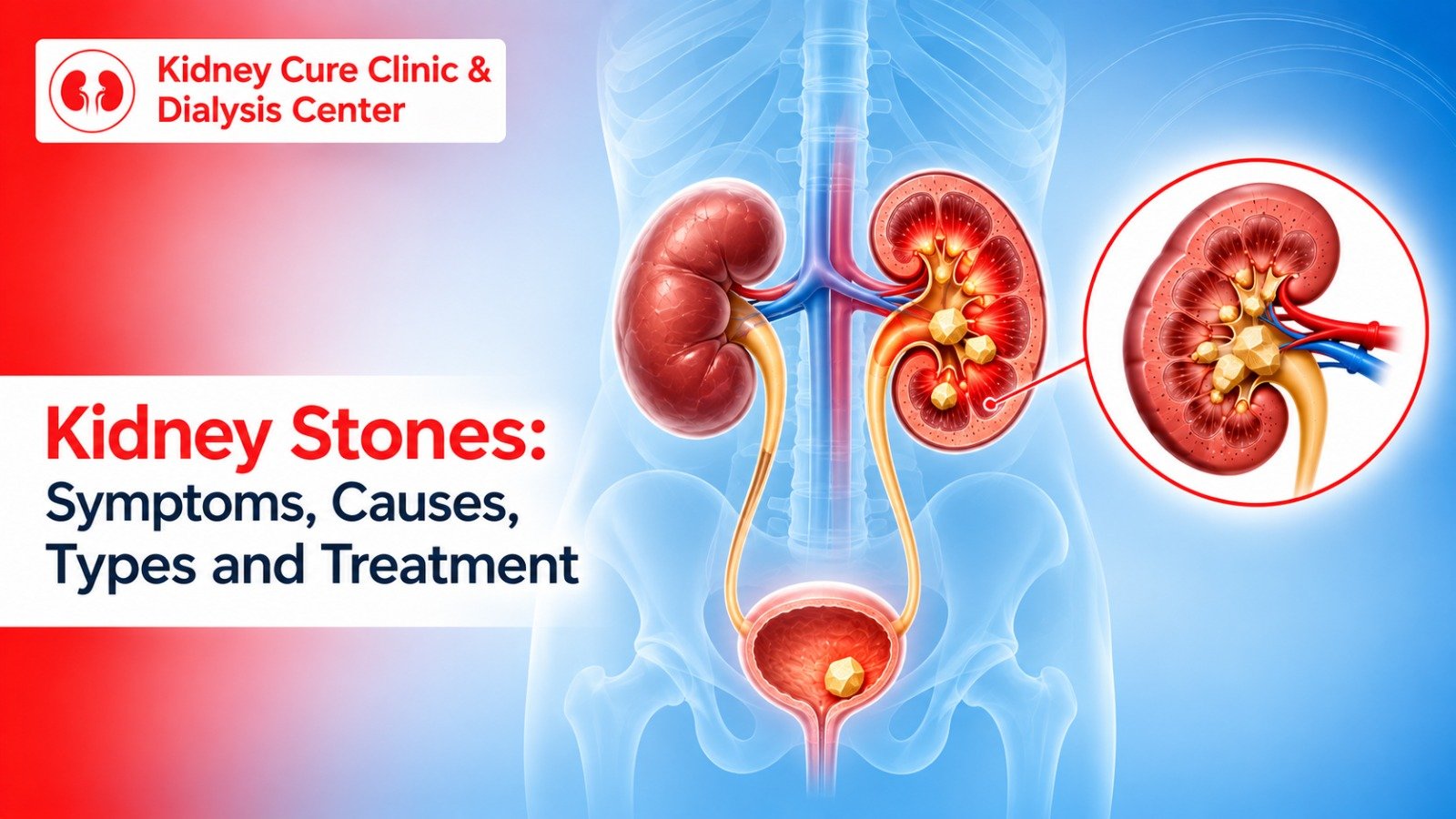
Ask anyone who has had a kidney stone, and they’ll tell you the same thing: the pain comes out of nowhere. One minute you’re fine. Then a cramp grips your side or back, and you can’t sit still. Other people only notice something odd in the toilet, like blood or a burning sensation. A stone is a hard lump formed from minerals and salts that stick together inside the kidney. If you’re looking for kidney stone treatment in Ahmedabad, it helps to know what causes them, how they’re found, and what doctors do about them.
What Are Kidney Stones?
Think of them as hardened mineral deposits. Some are grains you’d barely notice. Others grow big enough to jam the urinary tract.
The little ones usually slip out on their own. The big ones don’t, and they bring severe pain, bleeding, or trouble passing urine. That’s why doctors start by checking the stone’s size and exact position, because the treatment follows from there.
What Are the Common Symptoms of Kidney Stones?
A stone resting inside the kidney can be completely silent. The trouble starts once it drops into the ureter, the thin tube that runs down to the bladder.
Then you’ll know. The pain usually sits in your side or back, rolls in waves, and can run down to your lower belly or groin. Passing urine may sting, and you could find yourself rushing to the toilet again and again. The colour may change to pink, red, or brown. Pain this sharp often makes people feel sick or throw up. If the urine looks cloudy or smells bad, an infection could be involved.
Don’t wait if you have a fever or chills, can’t pass urine at all, or keep vomiting while in severe pain. A blocked kidney that’s also infected is an emergency.
What Causes Kidney Stones to Develop?
Stones form when your urine holds more stone-making material than it can dissolve. The most common trigger is simply not drinking enough, which is easy to do in Ahmedabad’s heat. Concentrated urine lets crystals form and stick.
Diet plays a part. Too much salt pushes more calcium into the urine, and some foods add to the risk in people already prone to certain stones. Beyond that, family history counts, as do digestive conditions, metabolic problems, and repeated urine infections. Had a stone once? You’re more likely to get another.
So finding the cause matters. Taking the stone out solves today’s problem, not next year’s.
What Are the Different Types of Kidney Stones?
Not all stones are alike, and the type affects how you prevent the next one.
| Type | What’s behind it |
|---|---|
| Calcium stones | Usually calcium oxalate, sometimes calcium phosphate |
| Uric acid stones | Often linked to urine that stays too acidic |
| Struvite stones | Tend to come after certain urinary infections |
| Cystine stones | Caused by a rare inherited condition, cystinuria |
If you pass a stone, keep it if you can. Your doctor may want a lab to work out what it’s made of.
How Are Kidney Stones Diagnosed?
Usually with a few tests working together. A urine sample can reveal blood, infection, and certain stone-related substances. Blood work shows how your kidneys are coping and whether something is feeding the problem. An ultrasound or CT scan then pinpoints the stone and shows if urine is getting through.
Your symptoms and history decide which of these you need.
Which Kidney Stone Treatment Is Right for You?
There’s no standard answer. The stone’s size, its position, what it’s made of, and whether it’s causing a blockage or infection all shape the plan.
1. Fluids and Pain Management
For small stones, doctors often just ask you to drink well and give you pain relief while you wait. But don’t gulp litres in the middle of an attack, especially if you’re being sick or have been told to limit fluids.
2. Medicines to Help Pass Stones
Some people with a stone in the ureter get medicines that help it move along. They aren’t right for every stone, so this needs a doctor’s call.
3. Shock Wave Lithotripsy (SWL)
Shock waves are aimed at the stone from outside the body, breaking it into fragments that you then pass in your urine. Size and position decide whether it’s a good fit.
4. Ureteroscopy
A slim scope goes up the urinary tract to find the stone, and the surgeon removes it or breaks it up. Some patients get a temporary stent afterwards.
5. Percutaneous Nephrolithotomy (PCNL)
When stones are large or awkward, surgeons reach them through a small cut in the back. Other methods usually come first.
If a kidney is blocked and infected at once, draining it and starting antibiotics comes before stone removal.
How Can You Reduce Your Risk of Kidney Stones?
Start with water, spread across the day, unless a doctor has told you to limit fluids. Go easy on added salt. Don’t cut calcium from your food unless advised, because that can backfire. Avoid high-dose vitamin C tablets you don’t need, and follow whatever diet advice fits your stone type.
If stones keep returning, ask about a 24-hour urine test. It picks out the risk factors specific to you.
Get Expert Guidance for Kidney Stone Treatment in Ahmedabad
Stones are painful, but an early diagnosis and the right treatment usually keep complications away. Repeated side pain, blood in the urine, or trouble passing it all deserve a proper check, not just a home remedy.
To get evaluated, call Kidney Cure Hospital at 7490906544 and ask about an appointment. The team will look at your symptoms and explain what comes next.
Good Kidney Stone treatment in Ahmedabad begins with understanding your own condition and choosing care that fits it.
Frequently Asked Questions
Many do, especially small ones, though the wait varies. Large stones or ones that block the flow usually need treatment.
Often a sudden stab of pain in the side or back. Some people see blood in their urine or feel nauseous. Others notice nothing.
It depends on the person. Many plans aim for about 2 to 2.5 litres of urine a day, but your doctor may set a different goal.
It depends on the stone. A small one may pass alone, while a larger one might need shock wave treatment, ureteroscopy, or PCNL.
Yes, even after successful removal. Drinking enough, adjusting your diet, and preventive care matched to your stone type all help lower the chance.