

Hearing "dialysis" for the first time is genuinely scary. But it's not something doctors reach for the moment kidney function dips, symptoms, blood work, fluid levels, overall health, and quality of life all factor into that call. If you're looking into Kidney Dialysis treatment in Ahmedabad , knowing what actually triggers the decision helps you have a real conversation with your nephrologist instead of just reacting to a number.
What Happens When the Kidneys Stop Working Properly?
Healthy kidneys clear waste and extra fluid from the blood, keeping minerals balanced along the way. Once function drops severely, all of that, waste, fluid, minerals, starts backing up instead.
Kidney failure generally means function has dropped below roughly 15% of normal. But eGFR alone doesn't make the call on dialysis.
Which is exactly why two people with near-identical test results might end up on very different timelines.
When Does a Patient Actually Need Dialysis?
Dialysis comes into play once the kidneys can't safely manage waste and fluid on their own, or when complications resist medicine and other treatment.
A nephrologist typically considers it when a patient develops:
- Too much fluid in the body. Breathing gets harder when swelling turns severe or fluid starts collecting in the lungs.
- Dangerously high potassium. This is an emergency risk; high levels can throw off the heart's rhythm.
- Waste building up badly. Nausea, vomiting, poor appetite, itching, weakness, exhaustion that won't lift, all signs waste products are accumulating.
- Very little or no urine. A sharp drop in output usually means kidney function has taken a serious hit.
- Acid the kidneys can't manage. If medicines aren't enough to keep the body's acid balance in check, dialysis steps in.
- Other complications that won't respond to treatment. Certain heart-related issues fall into this category too.
Is There a Specific Creatinine or eGFR Level for Dialysis?
No single test makes this decision.
Many people start around an eGFR of 5 to 10, but that's a rough pattern, not a rule. Symptoms and overall health drive the actual timing, some patients need dialysis sooner because of dangerous complications, while others get monitored closely for a while if symptoms stay mild.
This has to be patient-specific, because dialysis reshapes daily routine, diet, fluid intake, work, and family life all at once.
What Are the Main Types of Dialysis?
Two main forms exist.
Hemodialysis
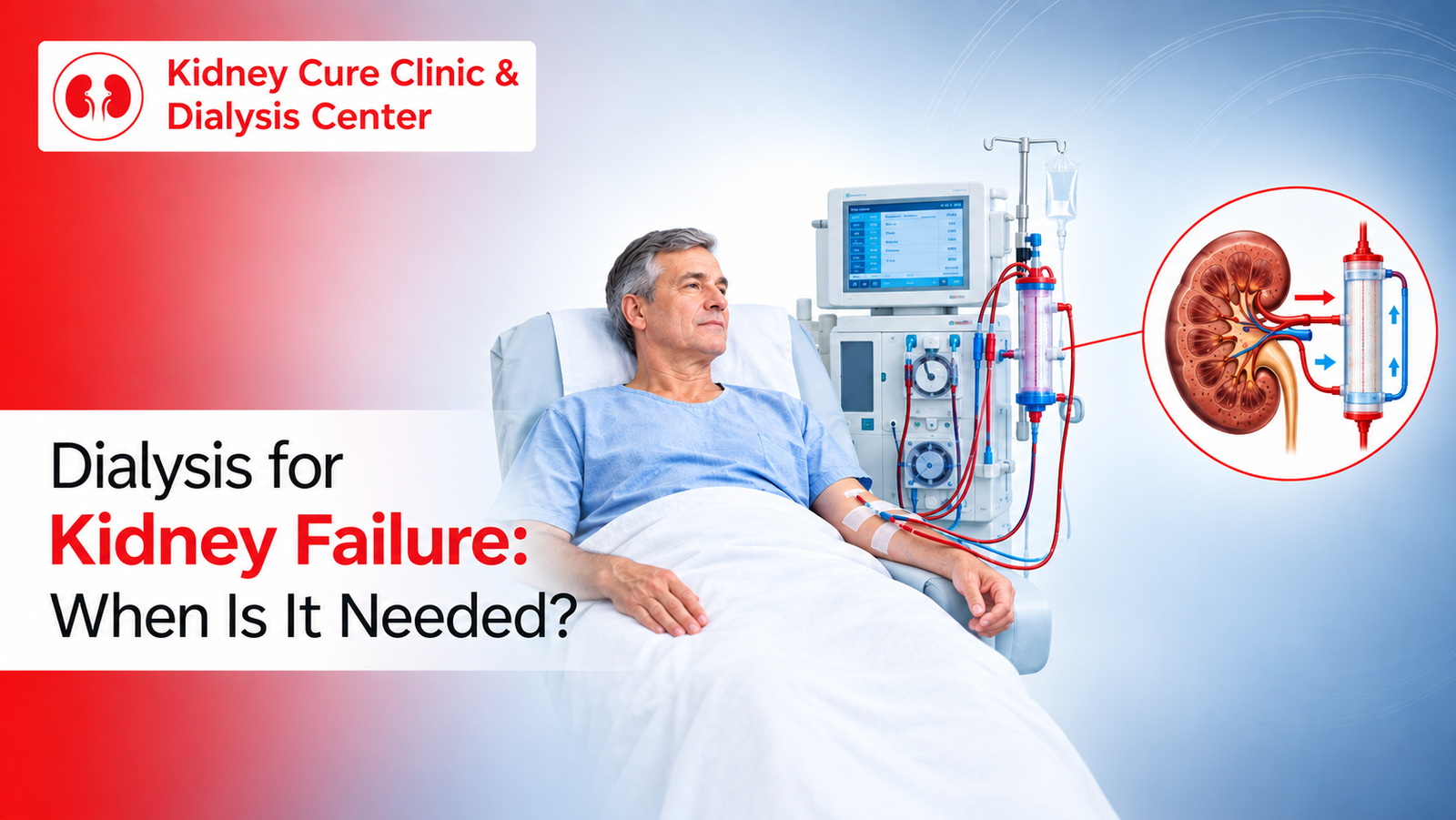
A machine and a filter called a dialyser do the work here, pulling waste and extra fluid out of the blood. This happens at a dialysis centre, or at home for suitable patients.
Peritoneal Dialysis
This route uses the lining of your own abdomen as a natural filter. Depending on your condition and lifestyle, it can let you treat at home.
Your nephrologist can walk you through the real tradeoffs, advantages, limitations, and what each option actually demands day-to-day, before you decide anything.
Can Dialysis Cure Kidney Failure?
No. It doesn't cure anything. Dialysis just takes over part of the job healthy kidneys used to do.
For permanent kidney failure, that often means long-term dialysis unless a transplant becomes an option. With acute kidney injury, though, it can be temporary, just bridging the gap while the kidneys recover on their own.
What Should Patients Consider Before Starting Dialysis?
This is a major decision, but nobody should feel like they're making it alone.
| What to consider | Why it matters |
|---|---|
| Kidney function | Shows how much kidney function remains |
| Symptoms | Helps determine whether kidney failure is affecting daily life |
| Fluid levels | Excess fluid can affect breathing and the heart |
| Potassium and other minerals | Abnormal levels can become dangerous |
| Nutrition | Poor appetite and weight loss may indicate worsening kidney failure |
| Lifestyle | Treatment can affect work, travel and daily activities |
| Transplant options | A transplant may be considered for eligible patients |
The National Kidney Foundation backs this too, decisions made together with your care team, weighing symptoms and personal circumstances, rather than chasing a single number.
How Kidney Cure Hospital Supports Patients Through Dialysis
At Kidney Cure Hospital , care isn't just plugging a patient into a machine. It's understanding the person's actual condition, explaining what's happening in plain terms, and helping patients and families make choices they're genuinely comfortable with.
For anyone searching for Kidney Dialysis treatment in Ahmedabad, call 7490906544 and get your appointment, the goal isn't just access to a machine, it's safe, genuinely personalised kidney care with support that continues afterwards.
Frequently Asked Questions
Once kidney function drops severely and waste, fluid, potassium, or acid builds to unsafe levels, especially when medicine alone can't keep it in check.
Sometimes, yes. A low number doesn't automatically mean starting right away. Symptoms, complications, nutrition, and overall health all weigh into the actual decision.
Severe swelling, trouble breathing, very little urine, ongoing nausea or vomiting, poor appetite, extreme weakness, itching, or abnormal blood results can all point toward advanced kidney failure.
Not always. Acute kidney injury might only need it temporarily while the kidneys heal. Permanent kidney failure usually means long-term dialysis, unless a transplant changes that picture.
Look for an experienced nephrology team that actually assesses your kidney function, symptoms, and complications before recommending dialysis, not one that jumps straight to treatment.