

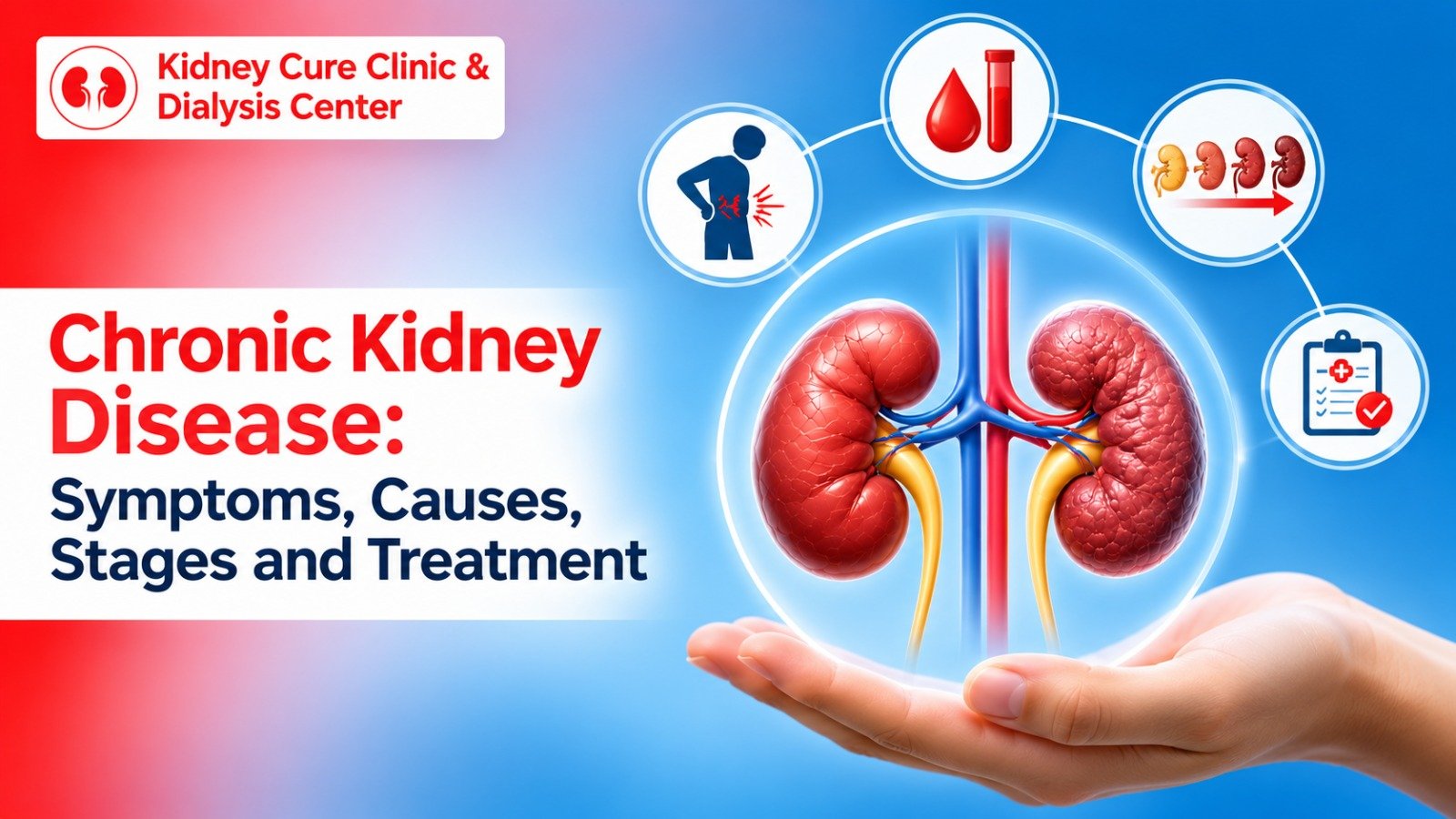
Your kidneys work around the clock. They clear waste from the blood, control how much fluid your body holds and keep minerals at safe levels. When they slowly stop doing that job properly, the condition is called Chronic Kidney Disease (CKD). If it's found early and you get the right Kidney Treatment in Ahmedabad, you can slow it, hold on to the kidney function you still have and cut the chance of complications.
Most people don't know there's a problem until it's well advanced. Learn the symptoms, causes and stages now, and you can act before the damage gets serious.
What Is Chronic Kidney Disease?
CKD causes the kidneys to become more ineffective at filtering blood. Waste and extra fluid then begin to collect in the body.
A doctor will usually diagnose CKD once the damage, or the lower kidney function, has been there for three months or longer. It can happen at any age, though people with diabetes or high blood pressure get it most often.
Once kidney damage is advanced, it usually can't be undone. Treatment started in time can slow it down, though, and help you stay well for longer.
Chronic Kidney Disease Early Warning Signs
At the start, CKD often gives you no symptoms. Later you may see:
- Puffy feet, ankles, hands or face from extra fluid
- Needing the toilet more, mostly at night, or passing very little urine
- Tiredness that doesn't lift. Kidneys that aren't working well can cause anaemia, and that wears you out
- Foamy urine that stays foamy, a sign that protein may be leaking
- Feeling sick, or not wanting to eat, because waste is building up in your blood
- Itchy skin that won't settle, caused by waste and a mineral imbalance
- Breathlessness, from extra fluid or anaemia
Any one of these can have other causes. If they keep happening, though, see a doctor.
What Causes Chronic Kidney Disease?
Several health problems can slowly damage the kidneys. These are the most common.
- Diabetes: High blood sugar harms the tiny blood vessels that clean waste out of your blood.
- High blood pressure: When it isn't controlled, it strains the blood vessels in the kidneys, and they gradually work less well.
- Repeated kidney infections: Infections that keep coming back, or that were never treated properly, can do lasting harm.
- Kidney inflammation: Glomerulonephritis is one example. It harms the microscopic filters that purify your blood.
- Inherited conditions: Some people are born with a problem such as polycystic kidney disease, where cysts form in the kidneys.
- Painkillers taken for years: NSAIDs in particular can harm the kidneys if you use them often.
What Are the Five Stages of Chronic Kidney Disease?
Doctors put CKD into five stages. They use eGFR, a blood test that shows how well your kidneys are filtering waste.
| CKD Stage | eGFR (mL/min/1.73 m²) | Kidney Function |
|---|---|---|
| Stage 1 | 90 or above | Normal filtration with signs of kidney damage |
| Stage 2 | 60 to 89 | Mild reduction with signs of kidney damage |
| Stage 3 | 30 to 59 | Moderate reduction |
| Stage 4 | 15 to 29 | Severe reduction |
| Stage 5 | Below 15 | Kidney failure |
Stage 3 has two parts, 3a and 3b. Doctors also look at the albumin in your urine, since it shows how much damage there is and how likely the disease is to get worse.
Important: If your eGFR is low or a result looks abnormal, have a doctor look into it properly. One test on its own may not confirm CKD.
How Is Chronic Kidney Disease Diagnosed?
You won’t need anything complicated. A few blood and urine tests, and sometimes a scan, show how your kidneys are doing.
- Serum creatinine test: creatinine is a waste product. A high level in your blood can mean the kidneys aren’t clearing it well.
- eGFR test: this turns your creatinine result into an estimate of how well your kidneys are filtering.
- Urine albumin test: it looks for protein in your urine. Healthy kidneys keep it in the bloodstream.
- Kidney ultrasound: a scan that can show stones, blockages or changes in the shape of the kidneys.
If you have diabetes, high blood pressure or kidney disease in the family, ask your doctor how often you should be tested.
What Are the Treatment Options for Chronic Kidney Disease?
What you need is determined on the stage of the disease, the cause, and your overall health. The aim is to slow the damage and treat any complications.
- Medicines to control blood pressure and blood sugar, and to deal with other problems linked to CKD.
- Diet changes. A kidney-friendly diet may mean adjusting the salt, protein, potassium and phosphorus you eat, to suit your needs.
- Lifestyle. Staying active, keeping to a healthy weight and not smoking all help.
- Dialysis. When the kidneys have badly failed, dialysis clears waste and extra fluid from the blood.
- Kidney transplant. Some patients with kidney failure may be considered for one, if they're eligible.
Don't change your medicines or start a strict kidney diet unless a doctor tells you to.
Get Expert Kidney Care at Kidney Cure Hospital, Ahmedabad
It's hard living with CKD, especially when you don't know what to do next. Regular check-ups, early diagnosis and the right treatment plan still make a big difference.
Kidney Cure Hospital can guide you on kidney conditions such as chronic kidney disease and kidney failure, and on the complications that come with them.
Noticed warning signs, or have diabetes or high blood pressure? Get a kidney check soon.
For professional guidance on Kidney Treatment in Ahmedabad, call Kidney Cure Hospital on 7490906544 and talk to the medical team about what's worrying you.
Frequently Asked Questions
Most chronic kidney damage can't be undone. Treatment can still slow the disease, manage complications and help you keep the kidney function you have left.
Often there aren't any you'd notice. Protein in the urine, changes in how you pass urine and swelling may appear, but blood and urine tests are what catch it early.
A nephrologist, a specialist in diagnosing and treating kidney diseases. In Ahmedabad, you can see the nephrology team at Kidney Cure Hospital for an evaluation and treatment advice.
It means your kidney function has dropped moderately. With regular monitoring, the right medicines and some lifestyle changes, many patients manage it and lower the risk of further damage.
When kidney function has fallen very low and the kidneys can no longer clear enough waste and extra fluid. The decision depends on your symptoms, test results and overall health, not just the eGFR number.